The Search Continues
It has been over a year since we began searching through listings and researching different regions of France, hunting for a shabby but charming countryside home. Something in need of love, but not too far gone.
We have pored over countless listings and gone on several home tours. We’ve even made an offer or two. Along the way we’ve learned some valuable lessons. Our criteria--and our list of questions--has grown longer and more detailed.
Some of these lessons should have been obvious. For example: maybe double-check if the sewage is actually connected to the city and more or less well looked after. Other lessons are a bit less obvious:
“Yes monsieur, well for this bus, if you would like it to stop by to pick you up, you’ll have to make a reservation before 5 p.m. the night before.”
Who knew that buses in small cities worked in a similar fashion to chauffeurs.
In less populated areas, the questions you need to ask become strangely specific to the region, and often things you didn’t imagine you would ever have to consider.
“So, the nuclear power plant just down the road… how well kept up are those reactors?”
Inside info: if you live within 15 kilometers of a nuclear site in France, you can pop into your local pharmacy to request iodine tablets. But if you’re over the age of 45, the risks of a reaction to the pills aren’t worth taking them, and therefore you don’t need them. I’m getting close enough to 45 that a living situation involving weighing the pros and cons of taking iodine pills, in the event of a nuclear “accident” (of which we’re reminded happens every 16 hours on average), feels like a meaningful downside.
Another area of concern is access to medical care. The words “medical desert” did, in fact, pass the lips of the taxi driver we called once we realized our bus wasn’t coming. He was happy to share that 80% of his income isn’t from ordinary taxi fares, but from rushing people in the local villages to other cities so they can access basic medical resources.
We began our search with a project in mind, a small budget, and some ideas for how we might spend our later years. We thought that while what we’re looking for is rather specific, we were open to discovering new places and “going on adventures,” as we like to say.
Many months later, while we still have our passion and hope about us, we’ve become much more adept in the art of the hunt. There is a whole choreography to it now: the dance between the listings and the agents and the workers and the bank. We haven’t gone full situation room yet, with maps and yarn connecting pushpins to routes and villages, but give us time.
Through all of this, we are still holding tight to our vision: creating a quiet space for ourselves to grow old in the French countryside. A place where we can grow our own food and carve out room to create. Where we can roast coffee, make preserves from our fruit, welcome friends and family, and protect a small piece of history.
The difference now is that our dream includes a few more footnotes. We’re no longer just looking for a stone house with crooked beams and a good view. We’re looking for a place where the sewage behaves, the bus actually arrives without prior notice, a doctor exists within reasonable distance, and iodine tablets are something we read about in a brochure rather than keep in a kitchen drawer.
The search continues. And the next time you set out to survey a new village or potential new home, by all means fall in love with the patina and the view. Just don’t forget to ask if the area is, by chance, susceptible to any meltdown-type situations.
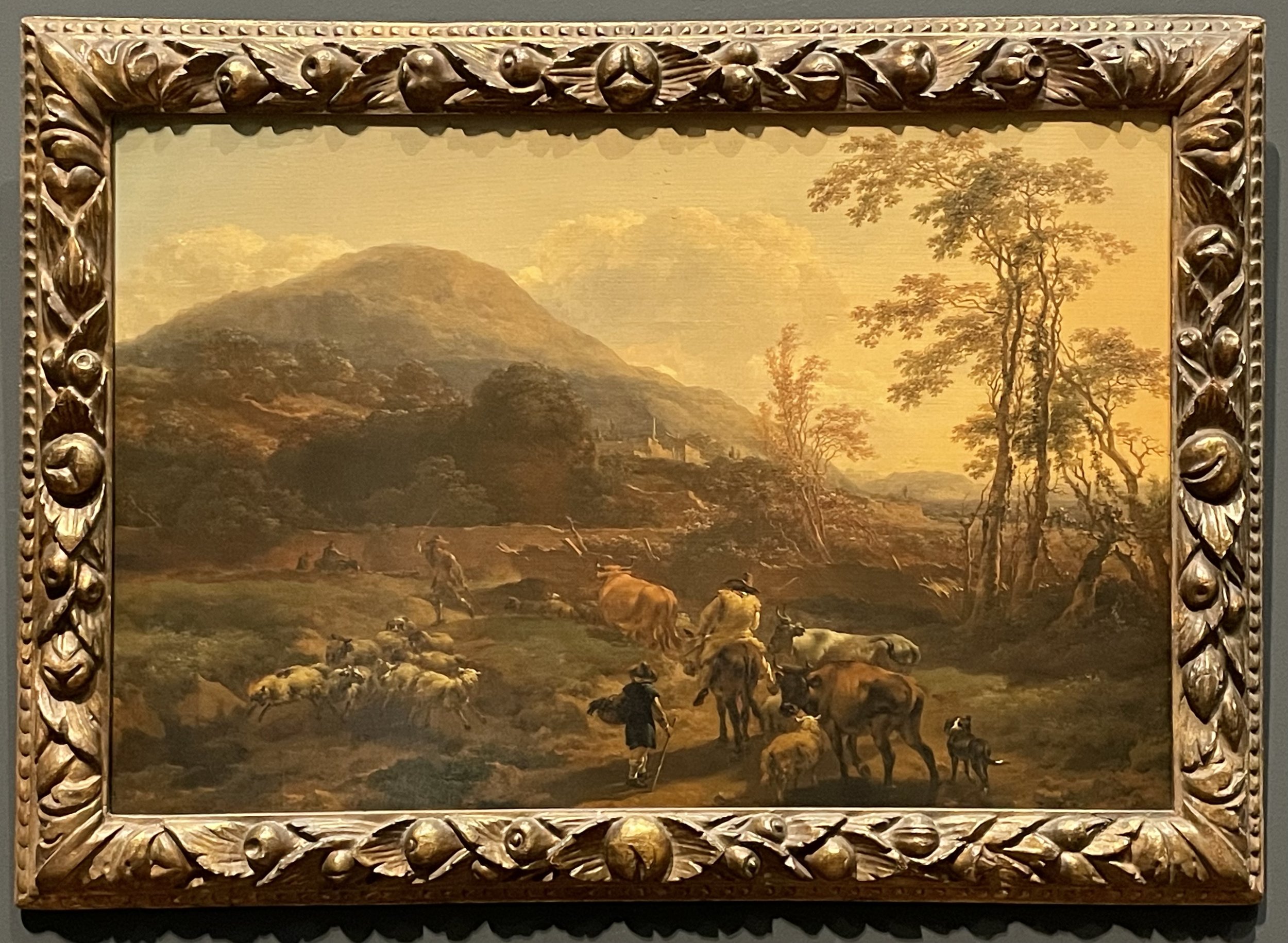
Artwork by Nicolaes Berchem, Photo taken by Benjamin Schwartz